How to Choose an Air Purifier - Complete Guide 2026
Find the best air purifier for your home. Expert tips on HEPA filters, CADR ratings, and top-tested models.
Ever notice yourself sneezing more at home, dealing with itchy eyes, or just struggling to breathe easy indoors? The problem might not be your average seasonal allergies—it could be the air quality inside your home.
According to the EPA, portable HEPA air cleaners have been shown to benefit allergy and asthma symptoms, and recent studies show air purifiers with HEPA and carbon filters reduced nitrogen dioxide by 36% and significantly lowered particulate matter in homes.
The good news? A quality air purifier tackles this head-on, eliminating up to 99.97% of harmful particles including dust, dust mites, pollen, viruses, and bacteria. But with so many options flooding the market, how do you pick the right one for your place?
In this complete guide, you'll discover exactly what matters before you buy, which technologies actually work, and the 8 best models of 2025 that've been tested and approved. Let's transform your home's air into a healthier, safer environment for your whole family.


Table of Contents
- Why You Need an Air Purifier Right Now
- Types of Air Purifiers: Understanding the Differences
- 6 Essential Criteria for Choosing Right
- How to Calculate the Right Size for Your Space
- Filters: The Heart of Your Purifier
- Extra Technologies That Actually Matter
- Monthly Costs and How to Save
- Frequently Asked Questions
- Conclusion
Why You Need an Air Purifier Right Now
Lots of folks think air purifiers are just fancy extras they don't really need. Here's the reality check: your indoor air can be 2 to 5 times more polluted than outdoor air.
Dust, dust mites, mold spores, pollen, pet dander, and even viruses are constantly floating around in the air you're breathing. In closed-up spaces, these pollutants build up and can cause everything from minor allergies to serious respiratory problems down the line.
Real Health Benefits You'll Actually Feel
A quality purifier brings changes you'll notice within the first week:
Fewer allergy attacks: HEPA filters capture 99.97% of common allergens, and studies show people with rhinitis and asthma report up to 70% fewer symptoms after 30 days of consistent use.
Better sleep quality: Cleaner air means less nighttime coughing and congestion. You'll wake up more refreshed because you're breathing better all night long.
Protection for kids and seniors: These groups are way more vulnerable to airborne particles. An air purifier drastically cuts exposure to viruses, bacteria, and other pathogens—super important during flu season.
Odor elimination: Beyond filtering invisible particles, models with activated carbon remove cooking smells, cigarette smoke, pet odors, and mustiness. Your place just feels fresher overall.
For people living in cities or dealing with enclosed spaces, air purifiers have gone from nice-to-have to essential. It's a direct investment in the health of everyone you care about.
Types of Air Purifiers: Which One's Right for You
Each type of air purifier uses different technology to clean your air. Understanding these differences is key to making the right choice.
HEPA Filter Purifiers: The Gold Standard
HEPA (High Efficiency Particulate Air) filters are the gold standard for air purification. They work like ultra-fine mesh screens that trap microscopic particles you can't even see.
How it works in practice: Air passes through layers of interwoven fibers that trap particles as small as 0.3 microns. To put that in perspective, a human hair is 70 microns thick. We're talking about capturing stuff 200 times smaller.
Main advantages:
- Captures 99.97% of dust, pollen, dust mites, and mold spores
- Traps airborne viruses and bacteria
- Doesn't produce ozone or chemical byproducts
- Scientifically proven effectiveness
- Recommended by doctors for allergy sufferers
Things to watch out for:
- Filters need replacement every 6-12 months
- Quality models cost a bit more upfront
- Won't remove gases and odors by itself
Best for: People with allergies, asthma, babies, seniors, and anyone wanting maximum protection. Perfect for bedrooms and living rooms where you spend most of your time.

Activated Carbon Filter Purifiers: The Odor Fighters
Purifiers with activated carbon filters specialize in absorbing gases and neutralizing smells. The carbon has millions of microscopic pores that trap odor molecules.
How it works: Air passes through a layer of specially treated carbon. Each gram of activated carbon has a surface area equivalent to a football field, capturing odors and volatile chemical compounds.
Main advantages:
- Eliminates cooking smells, smoke, and pet odors
- Removes toxic gases like formaldehyde
- Reduces volatile organic compounds (VOCs)
- Works great combined with HEPA
Things to watch out for:
- Doesn't efficiently capture solid particles
- Saturates faster than HEPA (3-6 months)
- Gradually loses effectiveness over time
Best for: Kitchens, homes with smokers, places with pets, or mold issues. Works best as a complement to HEPA filters.
Ionizer Purifiers: Silent Operation
Ionizers release negative ions into the air that attach to pollutant particles, making them heavy enough to fall or get captured on a collector plate.
Main advantages:
- Totally silent operation (no fan noise)
- Low energy consumption
- Minimal maintenance required
- Relaxing effect from negative ions
Things to watch out for:
- May generate small amounts of ozone
- Less efficient than HEPA at removing particles
- Requires regular cleaning of collector plate
- Not ideal for large spaces
Best for: Small bedrooms, home offices, or as a supplement to other systems. Great if you value whisper-quiet operation.

UV-C Light Purifiers: Microorganism Elimination
UV-C ultraviolet light has a specific wavelength that damages the DNA of viruses, bacteria, and fungi, preventing them from reproducing.
How it works: A UV-C bulb inside the unit irradiates passing air. Just a few seconds of exposure is enough to inactivate up to 99.9% of microorganisms.
Main advantages:
- Kills live viruses and bacteria
- Effective against COVID-19 and influenza
- No chemicals used
- Works well with HEPA filters
Things to watch out for:
- Bulb needs annual replacement
- UV-C must be contained (can't leak out)
- Doesn't remove physical particles alone
Best for: Medical offices, homes with immunocompromised people, flu season, or for maximum protection against airborne diseases.
6 Essential Criteria for Choosing the Right Air Purifier
Before buying, evaluate these critical points that separate a solid purifier from a dud.
1. Coverage Area (Most Important)
Every air purifier has a maximum recommended area. Ignoring this is the #1 mistake people make.
Basic rule: Choose a model with 20-30% more capacity than your room size. If your bedroom is 160 sq ft, buy a purifier rated for 200-210 sq ft. It'll work with headroom and be more efficient overall.
Why this matters: An undersized purifier runs constantly at maximum speed, makes noise, burns energy, and still can't properly clean your air. It's like using a small fan to cool a large room—just doesn't cut it.
How to calculate: Measure length x width of your room. A 13 ft x 12 ft bedroom is about 160 sq ft. Look for purifiers rated for 200-270 sq ft or higher.
2. CADR: Clean Air Delivery Rate
CADR measures the volume of clean air produced by an air purifier per minute, with higher scores meaning faster filtration. The higher the number, the better.
Reference values:
- Small rooms (up to 160 sq ft): Minimum CADR of 100-150 CFM
- Medium rooms (160-270 sq ft): CADR of 200-300 CFM
- Large rooms (above 270 sq ft): CADR of 350+ CFM
Pro tip: For ideal results, the purifier should provide 4-5 air changes per hour, which is the minimum recommended by industry standards. If you can't find the CADR in the specs, look for a more transparent brand.
3. Noise Level: Silence is Golden
Nobody wants a loud purifier running all night.
Acceptable levels:
- 18-25 dB: Practically silent, perfect for bedrooms
- 25-35 dB: Gentle hum, okay for sleeping
- 35-45 dB: Noticeable, fine for living rooms during the day
- Above 50 dB: Too loud for continuous use
Sleep mode: Check if the model has a night mode that reduces speed and noise. The difference between 22 dB and 45 dB is massive in real life. If you're setting up your cooling system alongside your purifier, coordinate noise levels for maximum comfort.
4. Maintenance Costs: Beyond the Price Tag
A cheap purifier can end up costing way more long-term.
Calculate total costs:
- Replacement HEPA filter: $25-80 (every 6-12 months)
- Carbon filter: $15-40 (every 3-6 months)
- UV bulb (if applicable): $20-50 (annual)
- Energy consumption: $3-8/month
Real example: A $150 purifier with $50 semi-annual filters costs $250 the first year. An $200 purifier with $25 filters costs $250 total. The difference isn't as big as it seems upfront.

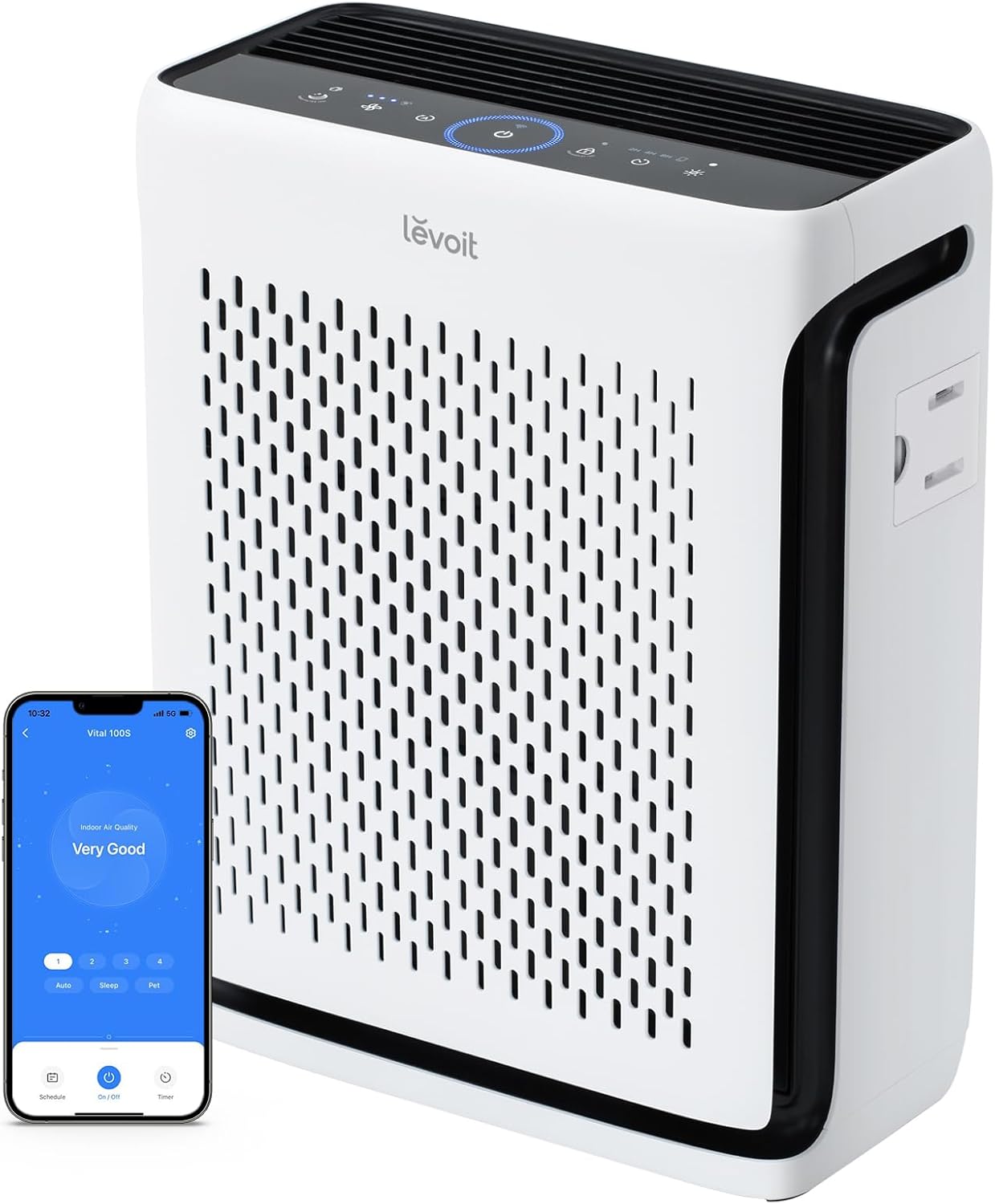
5. Smart Features: Worth It or Nah?
Extra functions add real convenience.
Actually useful:
- Air quality sensor: Auto-adjusts speed based on conditions
- Auto mode: Turns on/off as needed
- Programmable timer: Controls operating hours
- Filter replacement indicator: Alerts you when maintenance is due
Skip these:
- App control: Nice but not essential
- Alexa/Google compatibility: Extra convenience
- Built-in aromatherapy: Can actually interfere with filtration
6. Certifications and Testing: Quality Assurance
Certified purifiers have passed rigorous independent testing.
Look for:
- True HEPA certification: Guarantees minimum 99.97% efficiency
- AHAM Verified: Independent CADR testing
- Energy Star: Low energy consumption
- CARB certified: Safe ozone emission levels
Watch out for: Vague terms like "HEPA-type," "HEPA-like," or "similar efficiency." Demand clear specifications.
How to Calculate the Right Size for Your Space
Use this simple method to nail the capacity you need.
Quick Calculation Formula
Step 1: Calculate room area (length x width) Step 2: Multiply by 8 (average ceiling height of 8 feet) Step 3: Multiply by 5 (number of air changes per hour) Step 4: Divide by 60 (convert to CFM)
Practical example:
- 13 ft x 13 ft bedroom = 169 sq ft
- Volume: 169 sq ft x 8 ft = 1,352 cubic feet
- Required CADR: (1,352 x 5) / 60 = 113 CFM
Look for a purifier with CADR of at least 115-150 CFM for this bedroom.
Adjustments for Special Situations
Add 20-30% if:
- Room has lots of windows or doors
- House is on a busy street
- There are smokers present
- Multiple pets move through the space
- Someone has severe allergies
You can reduce 10-15% if:
- Room is well-sealed with little traffic
- Only used during nighttime
- House is away from polluted areas
Open floor plans: For combined living-dining-kitchen areas, add up the square footage and buy one powerful purifier or two smaller ones positioned strategically. When optimizing your entire space, check out our complete kitchen organization guide.
Filters: The Heart of Your Purifier
Understanding filters is essential because they do all the heavy lifting.
Multi-Stage Filtration System
The best purifiers use 3-4 filtration stages:
Pre-filter (1st layer): Catches large particles like hair, pet fur, and visible dust. Usually washable and reusable. Protects main filters and extends their lifespan.
HEPA filter (2nd layer): The main filter that works the magic. Captures 99.97% of particles 0.3 microns or larger. This includes pollen, dust mites, mold spores, viruses, and bacteria.
Activated carbon filter (3rd layer): Absorbs gases, odors, and volatile chemical compounds. Removes cooking smells, smoke, cleaning products, and even formaldehyde from new furniture.
Catalytic or UV filter (optional 4th layer): Some models add a final layer that breaks down toxic gases or uses UV light to eliminate living microorganisms.
Differences Between HEPA Types
Not all HEPA filters are created equal. There are classifications:
HEPA H11: Captures 95% of particles. Acceptable minimum but not the best protection.
HEPA H12: Captures 99.5%. Good for typical residential use.
HEPA H13: Captures 99.95%. Excellent for allergy sufferers and medical use.
HEPA H14: Captures 99.995%. Used in hospitals and clean rooms. Overkill for homes but offers maximum protection.
Recommendation: For home use, HEPA H12 or H13 offers the best value. H11 is only sufficient for low-pollution environments.

When to Replace Filters
Changing filters at the right time ensures consistent performance.
Signs you need to replace:
- Unit's indicator light turns on
- Noticeable drop in airflow
- Allergy symptoms return
- Odors aren't being eliminated anymore
- Filter looks visibly dirty or darkened
Average timelines:
- Pre-filter: Wash every 2-4 weeks, replace every 6-12 months
- HEPA: Replace every 6-12 months (depending on usage)
- Activated carbon: Replace every 3-6 months
- UV: Replace bulb annually
Money-saving tip: Keeping your pre-filter clean extends the life of your main filters, saving you cash long-term. Similarly, maintaining your other air quality appliances regularly prevents costly replacements.
Extra Technologies That Actually Make a Difference
Some features go beyond the basics and add significant value.
Air Quality Sensor
Smart sensors detect particles in real-time and automatically adjust fan speed.
How it works: Lasers or infrared sensors measure particle concentration in the air. When pollution is detected, the purifier speeds up. When air is clean, it slows down.
Real benefits: You save energy without compromising cleanliness. The unit works harder when needed and takes it easy when air is already pure. Some models show air quality in colors (green, yellow, red).
Worth it?: Yes, especially if you want convenience and automatic optimization. Prevents running the purifier at max speed constantly and wasting energy.
Sleep Mode: Essential for Bedrooms
Night mode reduces noise and light to avoid disrupting your sleep.
What changes: Speed drops to minimum necessary (usually 18-25 dB), display turns off or dims completely, and purification continues silently all night.
Real impact: The difference between sleeping with a regular purifier and one with sleep mode is huge. Some are so quiet you forget they're running.
Essential for: Adult bedrooms, nurseries and kids' rooms, any sleeping space.
Smart Home Integration
App control, Alexa or Google Home adds convenience.
Useful functions:
- Turn on/off remotely
- Schedule operating times
- Monitor air quality from your phone
- Receive maintenance alerts
- Adjust speed from anywhere
When it's worth it: If your home already has automation or you're away often. For folks who just want to set it and forget it, not essential. Consider pairing with your home security setup for complete smart home coverage.
Monthly Costs and How to Save
Fear of high electric bills stops lots of people from using purifiers properly. Let's break down the real numbers.
Real Consumption Calculation
Most residential purifiers consume between 20W and 60W on medium speed.
Practical example:
- 40W purifier running 24 hours
- Daily consumption: 40W x 24h = 960Wh = 0.96 kWh
- Monthly consumption: 0.96 kWh x 30 days = 28.8 kWh
- Cost: 28.8 kWh x $0.13 (average rate) = $3.75/month
Compare that to an air conditioner using 1000-1500W. A purifier costs less than running a regular light bulb.
5 Tips to Save Even More
1. Use auto mode: Lets the unit adjust speed automatically. Saves up to 40% energy compared to constant maximum speed.
2. Keep doors and windows closed: In sealed rooms, the purifier works less. Incoming polluted outdoor air forces the unit to work harder.
3. Keep filters clean: Dirty filters reduce airflow, making the motor work harder and consume more energy for the same results.
4. Position strategically: Leave at least 12 inches of clearance around the unit. Obstructions make it work harder.
5. Use smart timers: If you don't need 24/7 purification, program it to run a few hours before you get home or only during sleep.
Cost comparison with other appliances:
- Purifier 24/7: $3-8/month
- LED TV 4 hours/day: $4-7/month
- Refrigerator: $10-15/month
- Fan 8h/day: $5-8/month
The purifier falls in the same consumption range as essential appliances. The health investment is worth every penny. For more ways to cut energy costs, check out our comprehensive electricity savings guide.
Frequently Asked Questions
What's the best filter type for an air purifier?
True HEPA filters are the most effective, capturing 99.97% of particles as small as 0.3 microns, including dust, pollen, and dust mites. For odors, pair it with an activated carbon filter that absorbs gases and volatile compounds.
Do air purifiers use a lot of electricity?
No. Most models consume between 20W and 60W, about the same as an LED bulb. Monthly costs run $3-8, even when running 24/7. It's one of the most economical appliances you can run.
How long should I run my air purifier?
For best results, run it continuously or at least 8-12 hours daily. Air needs to circulate through the filter multiple times to remove all pollutants. In auto mode, it uses minimal energy when air is already clean.
How often do I need to replace filters?
HEPA filters last 6-12 months depending on usage and air quality. Activated carbon filters last 3-6 months. Always check your manufacturer's manual and watch for the replacement indicator light.
Do air purifiers work against viruses and bacteria?
Yes. Models with true HEPA filters capture airborne viruses and bacteria, and research shows significant reductions in harmful particles. Some also include UV-C light or ionization technology that deactivates microorganisms for extra protection against airborne diseases.
What size purifier do I need for my room?
Use the 4-5 air changes per hour rule. For a 160 sq ft bedroom, choose models rated for 200-270 sq ft capacity. For larger 320 sq ft rooms, opt for models rated 400-540 sq ft. Always prefer capacity higher than needed.
Do air purifiers dry out the air?
No. Air purifiers only filter air, they don't affect humidity levels. If your air feels dry, consider using a separate humidifier or combo models that combine purification and humidification.
Conclusion
Now you know everything you need to choose the perfect air purifier for your home. You understand that true HEPA filters are essential for capturing 99.97% of pollutants, that coverage area needs to be 20-30% larger than your room, and that CADR determines the unit's real efficiency. With this info, you're ready to make a smart investment in your family's health.
Remember: a proper purifier reduces allergy symptoms by up to 70%, improves sleep quality, and creates a safer environment for everyone. Monthly energy costs are low ($3-8), especially when weighed against respiratory health benefits. Before you decide, compare available models, check technical specs, and read reviews from actual users. I'm confident you'll find the perfect option to breathe easier for years to come.
Want to upgrade your indoor air quality even more? Consider adding a water purifier to ensure clean drinking water, pair it with proper bathroom ventilation, and maintain your home appliances regularly. Clean air is just the first step toward a healthier home environment.