How to Choose a Quality Water Purifier for Your Home
Find the perfect water purifier with our complete guide. Learn about NSF certifications, cooling systems, and savings.
Ever filled your glass at the water cooler and noticed a funky taste? Or worse—discovered that "cheap" model barely filters anything? With options ranging from $130 to $1,500, choosing wrong means throwing money away and potentially risking your family's health.
The good news? A well-chosen water purifier completely transforms your routine. You'll save up to $880 annually on bottled water, have ice-cold water always available, and help the planet by eliminating hundreds of plastic bottles.
In this comprehensive guide, you'll discover exactly how to evaluate NSF certifications, understand the real difference between compressor and thermoelectric cooling, and pick the perfect model for your family. I'll show you what actually matters when making your purchase.


Table of Contents
- Why Investing in a Purifier Is Worth Every Penny
- NSF Certification: What You Really Need to Know
- Thermoelectric or Compressor Cooling: Which to Choose
- How to Calculate the Right Size for Your Home
- Top Brands and Their Key Features
- Real Cost: Monthly Expenses
- Frequently Asked Questions
- Conclusion
Why Investing in a Purifier Is Worth Every Penny
Lots of folks still think buying bottled water is more economical. Let's crunch the numbers together and you'll be surprised by the real figures.
A family of 4 consumes an average of 10 gallons of drinking water daily. That means about 40 five-gallon bottles per month. With each bottle costing around $8 on average, you're spending $320 monthly just on drinking water. Many families actually spend closer to $80-100 monthly by buying cases of bottled water instead.
Savings That Make a Real Difference in Your Budget
With a quality purifier, this cost plummets. Monthly energy consumption runs between $4 to $15, depending on the model. Annual savings reach $880, an amount that pays for the initial investment in less than a year.
Benefits beyond your wallet:
- Zero logistics: No more rushing to order deliveries or lugging heavy bottles from the grocery store.
- Water always available: No risk of running out on weekends or holidays when suppliers don't deliver.
- Family health: Treated water with removal of chlorine, impurities, and bacteria. Certified models eliminate up to 99.9% of E.coli bacteria responsible for infections.
- Environmental impact: A family eliminates about 640 plastic bottles annually. This plastic takes 450 years to break down in nature.
For those concerned about organization, check out our kitchen organization guide, where a purifier fits perfectly.
Water Quality That Makes a Difference
The water arriving at your home through public pipes undergoes basic treatment, but the journey to your tap can compromise quality. Old piping, unmaintained water tanks, and poorly maintained faucets introduce rust, sediment, and even microorganisms.
An NSF-certified purifier guarantees three levels of protection: physical filtration of solid particles, chemical removal of chlorine and heavy metals, and bacteriological action against microorganisms. It's like having a mini treatment plant in your home. Many modern appliances now include advanced filtration systems that work seamlessly in your kitchen setup.
NSF Certification: Understanding What Really Matters
NSF certification isn't just a fancy sticker. It represents mandatory approval through three rigorous tests determining whether that purifier actually works. In the United States, selling water treatment devices without proper certification violates EPA guidelines.
When you see those NSF marks, it means the product was tested by an independent lab and meets minimum safety standards. But heads up: not every certified purifier offers the same quality.
NSF Standards Classification
This is the most important info on the certification. The main standards you'll encounter are NSF 42, NSF 53, and NSF P231. Here's what each means in practice:
Standard | What It Covers | What It Filters |
|---|---|---|
NSF 42 | Aesthetic Effects | Reduces chlorine, improves taste and odor. Makes water more palatable but doesn't address serious health contaminants. |
NSF 53 | Health Effects | Maximum efficiency. Removes heavy metals (lead, mercury), VOCs, asbestos, and some cysts. Filters particles down to 0.5 microns. |
NSF P231 | Microbiological Purifiers | Highest level. Reduces bacteria (99.9999%), viruses (99.99%), and cysts (99.9%). For water of unknown quality. |
NSF 58 | Reverse Osmosis | Comprehensive dissolved solids removal through RO membrane systems. |
NSF 401 | Emerging Contaminants | Reduces pharmaceuticals, pesticides, and 15+ emerging chemical contaminants not yet EPA-regulated. |
To put this in perspective: a grain of sand measures about 200 microns (µ). The human eye can only see particles starting at 40 µ. An NSF 53 certified purifier filters particles 100 times smaller than the eye can see.
Chlorine Reduction and Microbiological Efficiency
Beyond physical retention, NSF tests two crucial aspects:
Chlorine Reduction: The purifier must remove at least 75% of chlorine present in water. Excess chlorine leaves an unpleasant taste and odor, plus dries out skin and hair. If the device passes this test, it receives NSF 42 certification.
Microbiological Efficiency: This tests bacteria elimination like E.coli. Purifiers that pass receive NSF 53 or P231 certification depending on the reduction level. Models without this certification don't guarantee microbiologically safe water.
Important tip: NSF 53 certification addresses serious health concerns but is contaminant-specific. Always check which exact contaminants your model is certified to reduce.
If you're concerned about water quality and home safety, also explore our guides on air purifiers and complete water purification systems.
Thermoelectric or Compressor Cooling: The Real Difference
This is the most common question at purchase time. The price difference between the two systems reaches $300-400, so naturally you want to understand if it's worth paying more.
The honest answer: it completely depends on how you use it. There's no better or worse, just what's most suitable for your routine.
How Each System Works
Thermoelectric Cooling (Peltier Plate):
Uses thermoelectric plates that transfer heat from one side to another. One face cools while the other heats, dissipating warmth with a small fan. It's the same principle used in laptop coolers.
The process takes time: about 2 hours to chill 27 oz of water. Maximum cooling capacity hovers around 6 oz per hour. Minimum temperature reached: 43 to 54°F.
Compressor Cooling:
Works just like your fridge, using refrigerant gas circulating in a closed loop. When you plug it in, the compressor starts working and a thermostat controls temperature.
Chills much faster: up to 0.37 gallons per hour. Minimum temperature: 36°F. More robust models reach 13 gallons of chilled water daily.
Comparison Table for Your Decision
Feature | Thermoelectric Cooling | Compressor |
|---|---|---|
Capacity/hour | 6 oz | 0.26 to 0.37 gallons |
Minimum temperature | 43 to 54°F | 36 to 41°F |
Monthly consumption | 8-12 kWh | 5-8 kWh |
Average price | $350-600 | $650-1,200 |
Ideal for | 1 to 3 people | 4+ people |
Durability | 4-6 years | 7-10 years |
Noise | Low (fan) | Moderate |
When to Choose Thermoelectric Cooling
This model makes sense if you:
- Live alone or with 1-2 other people
- Don't mind "cool" water (accept between 46-54°F)
- Have a tighter budget
- Consume little chilled water during the day
- Prioritize quiet operation
Real example: Maria lives alone and works outside all day. Gets home, drinks 2-3 glasses of cool water in the evening. For her, a $400 thermoelectric purifier works perfectly without wasting capacity.
When to Invest in Compressor
Go for compressor if you:
- Have a family with 4 or more people
- Live in a hot region (Southwest, South, Florida)
- Like really cold water (36-41°F)
- Use cold water for making juices, iced tea
- Work from home and consume water all day
Real example: Family of 5 in Phoenix. Everyone home all day. Each person fills a 32 oz bottle in the morning. Without compressor, the water never gets cold enough and arguments start. With compressor, there's ice-cold water for everyone without stress.
For those working from home, consider checking out our best office chairs guide that complement your workspace.

How to Calculate the Right Size for Your Home
Buying a purifier that's too small is frustrating because the water runs out fast. Too large means spending more unnecessarily. I'll show you how to nail the sizing.
Internal Reservoir Capacity
The reservoir is where already-chilled water sits, ready for consumption. Common sizes:
27 to 34 oz: Compact models, ideal for 1-2 people. Fills 3-4 glasses before needing new cooling cycle.
40 to 54 oz: Mid-size for families of 3-4 people. Allows filling a small pitcher at once.
68 oz or more: Premium or commercial models. Serves 5+ people or small offices without issues.
Water Flow Rate and Fill Speed
Another important spec is how many gallons per hour the unit processes. This determines how long you wait to fill a glass.
Basic models: 8-10 gallons/hour Mid-range models: 13-16 gallons/hour Premium models: 21-26 gallons/hour
In practice: If you're in a hurry and need to fill a 25 oz bottle, models with turbo jet technology (like Powerjet) do this in 15 seconds. Basic models take 45-60 seconds.
Practical Sizing Rule
Use this simple formula:
Number of people x 8 oz x 4 = Minimum capacity needed
Why 8 oz? It's the average for a full glass. Why x4? To have cold water for 4 consumption rounds per day without waiting.
Examples:
- 2 people: 2 x 8 x 4 = 64 oz → A 68 oz purifier is perfect
- 3 people: 3 x 8 x 4 = 96 oz → Need model with good cooling (compressor)
- 5 people: 5 x 8 x 4 = 160 oz → Commercial model or robust compressor
Golden tip: If you regularly have guests over, always size for 2 extra people. An undersized purifier at a BBQ is that friend nobody wants to have.
Looking to upgrade your entire kitchen setup? A water purifier is just one piece of creating a functional, efficient cooking space.
Top Brands and Their Key Features
The American market has dozens of brands, but 5 dominate 80% of sales. Each has its strong suit.
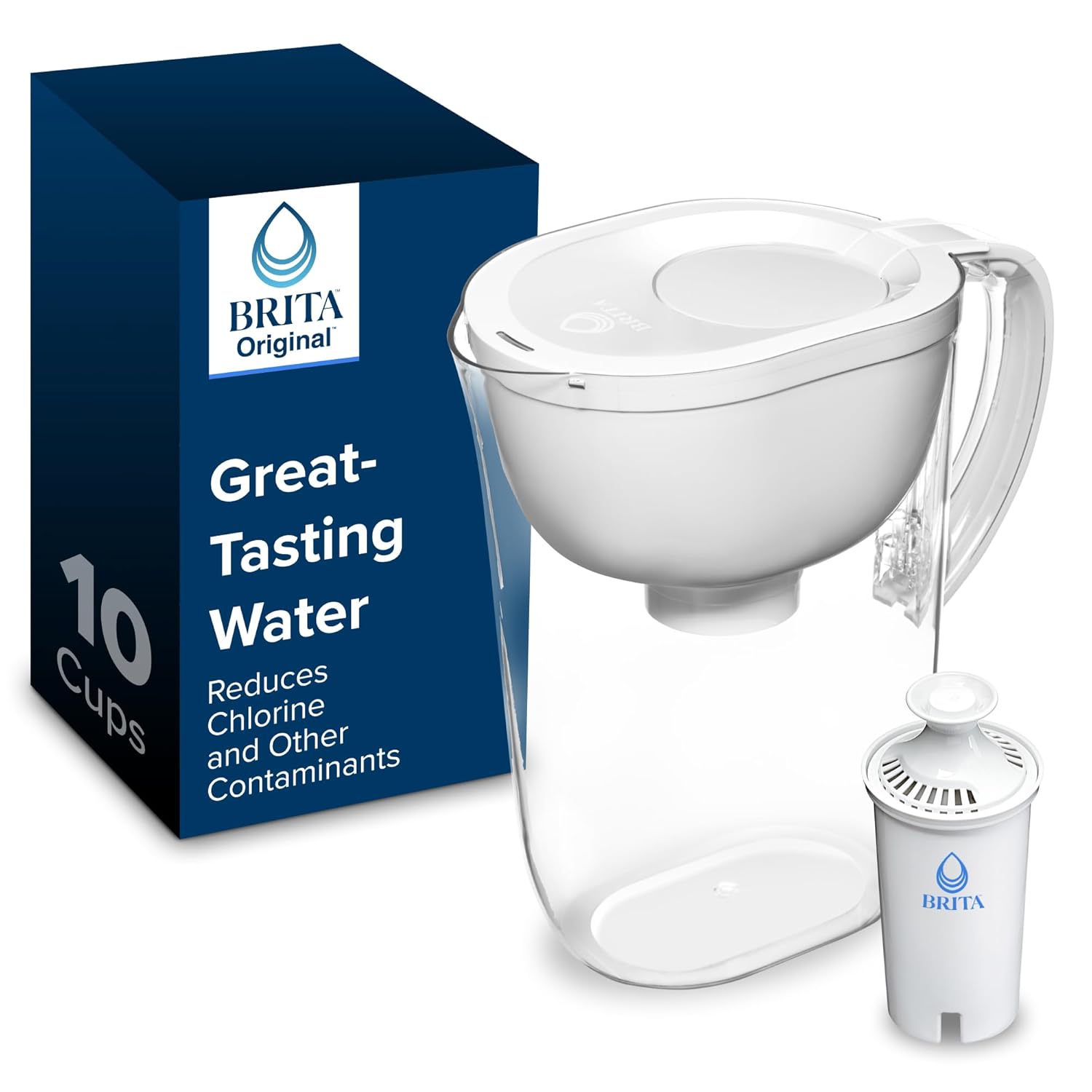
Brita: Trusted Household Name
Brita is synonymous with water filtration in America. Their dispensers stand out for:
- Easy filter replacement without tools
- NSF 42 and 53 certified models
- Filters reduce chlorine, lead, and mercury
- Competitive prices ($30-200)
Best model: Brita Ultramax - 18 cup capacity, NSF certified, fits in fridge, around $35.
Primo: Premium Water Solutions
Primo focuses on convenience and quality. Their differentials are:
- Bottom-loading water dispensers (no heavy lifting)
- Energy Star certified models
- Hot and cold water options
- Sleek, modern designs
Best model: Primo Bottom Loading Dispenser - hot/cold water, self-cleaning, Energy Star certified, $250.
Avalon: Feature-Rich Options
Avalon offers premium features at mid-range prices:
- Self-cleaning ozone function
- Child safety locks on hot water
- Stainless steel construction
- LED indicators for all functions
Best model: Avalon A5 - bottom loading, hot/cold/room temp, self-cleaning, $180.
Waterdrop: Advanced Filtration Technology
Waterdrop specializes in under-sink systems with serious filtration:
- Tankless RO systems
- NSF 53, 58, 401 certified
- Smart faucet with TDS display
- Space-saving designs
Best model: Waterdrop G3 - tankless RO, 7-stage filtration, NSF certified, $550.
Aquasana: Comprehensive Home Solutions
For whole-house and point-of-use filtration:
- NSF certified for 77+ contaminants
- Claryum filtration technology
- Long-lasting filters (6+ months)
- Professional installation available
Best model: Aquasana AQ-5200 - under counter, NSF 42, 53, 401 certified, $200.
Remember that choosing the right appliances impacts your daily quality of life significantly.

Real Cost: Monthly Expenses
Let's calculate what it actually costs to keep a water purifier running. The numbers might surprise you.
Electrical Energy Consumption
Consumption varies according to cooling system:
Thermoelectric Purifier (27 oz):
- Average power: 65W when operating
- Runtime: 8 hours/day average (on-off cycles)
- Monthly consumption: 65W x 8h x 30 = 15.6 kWh
- Cost at $0.12/kWh: $1.87/month
Compressor Purifier (68 oz):
- Average power: 90W (but shorter cycles)
- Effective runtime: 5 hours/day (thermostat optimizes)
- Monthly consumption: 90W x 5h x 30 = 13.5 kWh
- Cost at $0.12/kWh: $1.62/month
Surprised? The compressor uses LESS because it's more efficient. It chills fast and shuts off. The thermoelectric plate keeps trying to maintain temperature constantly.
Maintenance Costs
Filter replacement: $10 to $40, depending on brand and model. Duration: 6 to 9 months.
Annualized cost:
- Basic filter: $20 x 2 changes = $40/year = $3.33/month
- Premium filter: $40 x 2 changes = $80/year = $6.67/month
Cleaning and preventive maintenance: $0 if done yourself (water and mild soap once a month).
Complete Annual Cost Comparison
Option | Monthly Cost | Annual Cost |
|---|---|---|
Bottled water (4 people) | $80.00 | $960.00 |
Thermoelectric Purifier | $5.20 | $62.40 |
Compressor Purifier | $8.29 | $99.48 |
| Annual savings | $860 to $898 |
Payback Period: When Investment Pays Off
Thermoelectric purifier at $450:
- Monthly savings vs bottled: $75
- Return time: 450 ÷ 75 = 6 months
Compressor purifier at $900:
- Monthly savings vs bottled: $72
- Return time: 900 ÷ 72 = 12.5 months
After this period, it's pure savings every month. Over 5 years, you'll have saved more than $4,000.
Already thinking about optimizing other expenses? Check our guide on how to save on electricity bills and reducing home energy consumption.

Frequently Asked Questions
What's the difference between compressor and thermoelectric water purifiers?
Compressor models chill up to 0.37 gallons per hour and maintain 36°F temperatures, perfect for large families. Thermoelectric systems cool about 6 oz/hour, use less energy, and work great for 1-3 people. Both filter equally well.
What does NSF 53 certification mean for water purifiers?
NSF 53 indicates maximum efficiency in removing health-related contaminants, filtering particles down to 0.5 microns—100 times smaller than grains of sand. This certification ensures removal of up to 99.9% of bacteria like E.coli.
How long do water purifier filters last?
Most filters last 6-9 months or about 800-1,000 gallons, depending on local water quality. Modern purifiers have indicator lights that warn you when it's time for replacement.
Do water purifiers really save money?
Yes. A family of 4 spends roughly $80 monthly on bottled water. With a purifier, energy costs drop to $4-7, generating savings of $880 per year while eliminating 640 plastic bottles.
Do compressor water purifiers use a lot of energy?
No. Compressor models consume about 5-8 kWh monthly, costing $0.60-$0.96 on your electric bill. They're more economical than thermoelectric for heavy use since they chill faster.
Is it safe to drink water straight from the purifier without boiling?
Yes, as long as the purifier has NSF 53 certification for microbiological reduction. Models with this certification eliminate up to 99.9% of harmful bacteria like E.coli, making water safe for immediate consumption.
What reservoir size should I choose for my family?
For 1-2 people, 27 oz is sufficient. Families of 3-4 need 40-54 oz capacity. Above 5 people or commercial settings, go for models with 68 oz or more storage capacity.

Conclusion
Now you know the essential criteria for choosing a water purifier: INMETRO Class A certification, a type of cooling suitable for your needs, and correct sizing. With this information, you are prepared to make a smart investment that will save you over R$ 600 per year.
Remember: prioritize models with certified bacteriological efficiency and refills that last 6+ months. Compare current prices, read real reviews from other users, and choose a brand with a good service network. Your family deserves pure, chilled water that is always available.
Check out the options for certified water purifiers on Amazon and transform the water quality in your home today.