Why Every Home Needs A Tool Kit: Save $3K+ Yearly
Discover how a basic tool kit saves Americans $2,400-$6,000 annually and prepares you for any household emergency.
Did you know Americans spend an average of $1,200 per year calling professionals for problems they could solve with basic tools? A dripping faucet, a picture to hang, or furniture to assemble—everyday situations that become headaches when you don't have the right tools at home.
The truth is simple: having a tool kit isn't a luxury, it's a necessity. And we're not talking about becoming a weekend warrior. We're talking about independence, real savings, and that satisfying feeling of solving your own problems without depending on others.
In this complete guide, you'll discover exactly why investing in a tool kit is one of the smartest decisions you can make for your home. We'll show you how much you save, which tools are truly essential, and how to choose the perfect kit for your needs.
Table of Contents
- The Real Savings of Home Tools
- Independence and Autonomy in Daily Life
- 8 Essential Tools That Solve 80% of Problems
- How to Choose Your Perfect Kit
- Ready-Made vs DIY Kit: What's Best
- Costly Mistakes When Buying Tools
- How to Organize and Maintain Your Tools
- Frequently Asked Questions
- Conclusion
The Real Savings of Home Tools Will Surprise You
Let's get straight to the numbers that really matter for your wallet. Having a basic tool kit represents proven monthly savings between $200 and $500, depending on the frequency of small repairs in your home.
Most professionals charge a minimum visit fee between $60 and $125, even for services taking less than 20 minutes. Assembling simple furniture can cost $75-$200. Hanging three pictures runs $80-$120. Fixing a dripping faucet costs $100-$200.
Do the math with me: if you need just two of these services per month, that's already $300-$500 leaving your budget. In one year, that represents $3,600-$6,000 in expenses that could be avoided.
The Self-Paying Investment
A complete tool kit costs between $50 and $150. That means it pays for itself in less than one month of use. From there, it's pure savings in your pocket.
Check out a real, common scenario: you buy a tool kit for $100. In the first month, you assemble a new cabinet (save $100), hang four pictures (save $80), and adjust a loose faucet (save $60). Total first-month savings: $240.
Result: you've already recovered the investment and pocketed an extra $140. Over the following months, considering just two small repairs monthly, you save between $2,400 and $4,800 net.

Savings Beyond the Obvious
But the savings go beyond avoided services. Having tools at home also means you can do preventive maintenance that prevents bigger, more expensive problems down the road.
A faucet that keeps dripping for weeks can waste up to 12 gallons of water per day. That represents $25-$40 extra on your monthly water bill. With a simple adjustable wrench and five minutes of your time, you solve the problem and save that amount every month.
Poorly assembled or loose furniture wears out faster and needs replacement sooner. Keeping screws tight and structures solid increases your furniture's lifespan by up to 40%, according to home maintenance experts.
Plus, you're not at the mercy of professionals' schedules. You can solve the problem the moment it appears, preventing small inconveniences from turning into expensive emergencies. If you work from home, check out our guide on essential office items to create your ideal workspace.
Independence That Transforms Your Daily Life
There's something incredibly liberating about looking at a problem at home and thinking: I can fix this myself. This independence goes way beyond financial savings—it transforms your relationship with where you live.
How many times have you put off doing something at home because it depended on calling someone? That shelf that sat for months leaning against the wall waiting for installation. The picture you wanted to move but never did. The faucet that dripped at midnight disrupting your sleep.
With a basic tool kit, you solve these situations in minutes. No need to wait days to schedule a professional. No need to adjust your routine to someone else's schedule. And most importantly, no need to live with small problems that become major annoyances.
Confidence for Bigger Projects
Having tools at home also opens doors to projects you never imagined doing. Customizing furniture, creating custom organization solutions, making small decorative renovations—it all becomes possible.
Many people discover an enjoyable hobby in the DIY world simply because they started having the right tools on hand. And even if you don't become an enthusiast, the simple ability to solve your own problems brings a sense of control over your space.
For those working remotely, this independence is even more valuable. You can quickly adjust your workstation, install monitor stands, organize cables, and create the ideal environment without waiting for anyone. Learn more about optimizing your home office setup.
Safety and Emergency Preparedness
Some household situations can't wait. A small leak at 11 PM on a Friday night. Furniture coming loose from the wall that needs immediate securing for safety. A door that jams and you need to leave.
Having basic tools at home means being prepared for these emergencies. You can make a safe temporary repair until you can solve it definitively or call a specialized professional when truly necessary.
This preparation is also important for broader emergency situations, where you might need to shut off valves, close registers, or make quick adjustments to prevent greater damage.
8 Essential Tools That Solve 80% of Household Problems
The Pareto principle works perfectly here: 20% of tools solve 80% of problems. You don't need a complete workshop to be self-sufficient at home. You need the right essential tools.
These eight tools form the foundation of any functional household kit. With them, you solve the vast majority of day-to-day situations without needing sophisticated equipment or advanced technical knowledge.
1. Hammer: The Irreplaceable Classic
The hammer is probably the oldest and most versatile tool that exists. It's good for much more than just driving nails—you use it to fix, adjust, remove old nails, and even do small demolitions when necessary.
The ideal model for home is the claw hammer, the one with a flat end for striking and the other in a claw shape for removing nails. Choose one with a fiberglass or treated wood handle and forged steel head between 12-20 ounces.
What you'll use it for: hanging pictures, mounting shelves, assembling furniture, making adjustments to wood structures, removing old nails from previous renovations, small repairs to fences and gates.
A good hammer lasts decades with basic care. Invest in a quality model and it'll be your reliable companion for many years.
2. Screwdriver Set: Flathead and Phillips
Screwdrivers are indispensable for tightening and loosening screws in practically everything inside your home. Furniture, appliances, outlets, switches, doorknobs—almost everything uses screws.
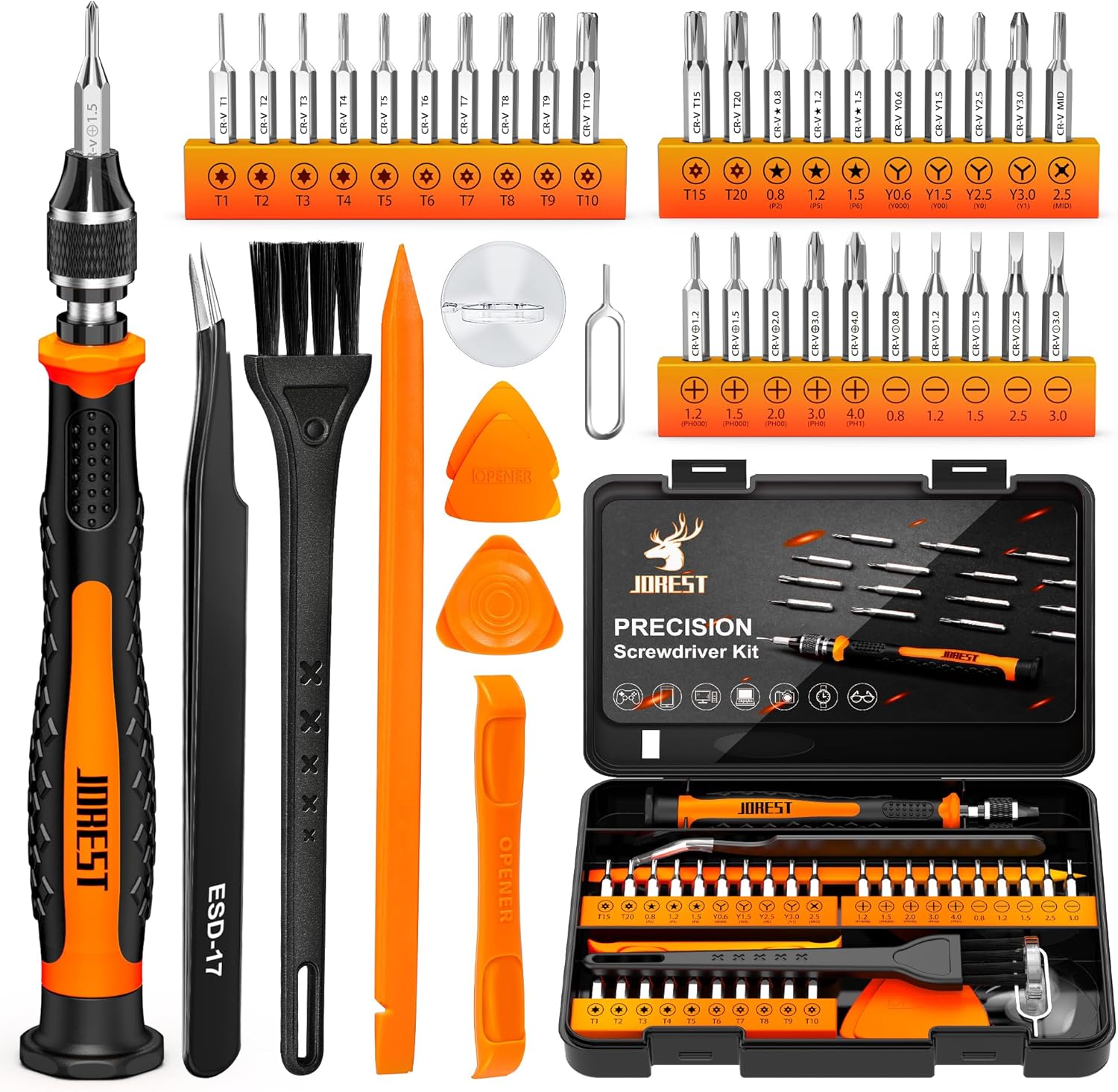
You need two types: regular flathead screwdrivers (straight tip) and Phillips screwdrivers (cross-shaped X tip). Ideally, have a set with at least three sizes of each type to cover small, medium, and large screws.
Important tip: prefer sets with rubberized or non-slip handles for better grip and comfort. Models with magnetic handles make work much easier by holding the screw on the screwdriver tip.
What you'll use them for: assembling and disassembling furniture, adjusting door and cabinet hinges, changing outlets and switches, fixing appliances, installing locks, tightening loose screws anywhere in the house.
For those wanting extra convenience, there are sets with a single handle and interchangeable tips. You get all sizes while taking up little space in your toolbox. Looking to organize your kitchen? Check out our guide on kitchen organization.
3. Universal Pliers: Pure Versatility
Pliers are that tool that always saves the day in unexpected ways. They cut, hold, tighten, pull, bend, and twist. They're practically a multifunctional extension of your hands.
For home use, universal pliers are the best choice. They combine different functions in one tool: serrated part for holding objects, area for cutting wires and cables, and leverage system that multiplies your strength.
Always choose a model with insulated handles. Even if you don't plan on working with electricity, insulation offers extra protection in unexpected situations and ensures more safety.
What you'll use them for: cutting wires and cables, firmly holding small objects, pulling stubborn nails, bending metals, tightening hard-to-reach nuts and bolts, holding pieces during assemblies.
An 8-inch plier perfectly meets household needs. Larger models are useful for heavier work but take up more space and are unnecessary for most people.
4. 10-15 Foot Tape Measure
Measuring is fundamental before any project. Buying furniture that doesn't fit the space, making a hole in the wrong place, miscalculating the amount of material needed—all these problems are solved with a good tape measure.
The ideal model for home is a retractable metal tape measure of 10-15 feet. It's compact, easy to use, and covers all home measurements. Prefer models with a lock to keep the tape extended and dual display (inches and feet).
What you'll use it for: measuring spaces before buying furniture, calculating paint or flooring amounts, positioning pictures and shelves, measuring for curtain installation, calculating heights and widths for DIY projects, checking measurements during assemblies.
Proper measurement prevents rework, material waste, and that frustration of discovering something doesn't fit after you've bought it. The tape measure is small, cheap, and extremely useful.
5. Level: Perfect Alignment Guarantee
Nothing's more frustrating than hanging a picture or installing a shelf and noticing it's crooked. The level solves this problem simply and effectively, ensuring everything stays perfectly aligned.
The most common models are bubble levels, those with liquid tubes and an air bubble that indicates when it's level. For home use, a 12-24 inch level is sufficient and easy to handle.
What you'll use it for: installing shelves, hanging pictures and mirrors, assembling furniture, checking camera alignment, ensuring appliances like refrigerators and washing machines are level, decoration and organization projects.
Refrigerators and washing machines need to be level to work correctly and avoid premature wear. A simple adjustment to the adjustable feet, checked with a level, can extend the lifespan of these home appliances by years.

6. Adjustable Wrench
The adjustable wrench is that smart tool that adapts to different sizes of nuts and bolts. With it, you don't need dozens of fixed wrenches and can solve practically any situation involving threaded connections.
The adjustable model has a movable jaw controlled by a side screw. You turn the screw, adjust the opening to the size you need, and you're done—you have the exact wrench for that job.
For home use, a 10-inch adjustable wrench is perfect. It opens up to about 1.2 inches, covering the vast majority of nuts and bolts you'll encounter at home.
What you'll use it for: tightening and loosening plumbing connections, maintaining faucets and showerheads, adjusting valves and registers, assembling and disassembling structures with nuts, plumbing work, preventive maintenance in bathroom installations.
Small leaks in connections are usually solved just by tightening the nut with an adjustable wrench. It's one of those 30-second fixes that avoids calling a plumber and saves $100-150. For more bathroom tips, see our bathroom organization guide.
7. Utility Knife with Retractable Blade
The utility knife seems simple but is incredibly useful for dozens of tasks. It cuts materials precisely that regular scissors or knives can't, doing so safely and with control.
Choose a model with a retractable blade and safety lock. The ability to retract the blade when not using it prevents accidents and makes storage easier. Models with rubberized grip offer better control.
What you'll use it for: opening boxes and packages, cutting ropes and strings, removing plastic burrs, marking lines on various materials, cutting cardboard and paper, making adjustments to silicone seals, precision work on DIY projects.
Always keep replacement blades with the utility knife. Dull blades are dangerous because they require more force and can slip. Changing the blade costs pennies and greatly increases safety and work efficiency.
8. Portable Flashlight or Work Light
Working in the dark or poorly lit areas is dangerous and inefficient. A good portable light source is essential for doing any repair safely and precisely.
Nowadays, LED flashlights are ideal: powerful illumination, excellent durability, and low battery consumption. Models with a magnetic base or hook for hanging are perfect for work requiring free hands.
What you'll use it for: illuminating hard-to-reach areas during repairs, working in dark cabinets and drawers, checking electrical connections, power outage emergencies, nighttime work in outdoor areas, inspections of areas with mold or structural problems.
Emergency situations like power outages or nighttime problems become much easier to solve when you have a powerful flashlight on hand. It's a safety item that also serves as a work tool. For more home safety tips, check our guide on security cameras.
How to Choose the Perfect Kit for Your Needs
Not all tool kits are equal, and choosing the right model makes all the difference between having tools you actually use and having a box taking up space. Let's get straight to the practical criteria that matter.
The first step is being honest about your actual use. Will you do occasional maintenance or do you like frequent DIY projects? Do you live in an apartment or house? Do you have furniture requiring regular assembly? Your answers determine the ideal kit type.
Piece Count: More Isn't Always Better
Kits with 100, 150, or 200 pieces seem advantageous, but in practice, you'll never use half of those pieces. Many manufacturers fill kits with tiny bits, sockets, and specialized tools with limited home application.
For most people, a kit of 40-80 well-chosen pieces is more than enough. What's important is having variety in essential tools, not total item count.
A good basic kit should contain: hammer, at least 5 varied screwdrivers (flathead and Phillips), universal pliers, tape measure, level, adjustable wrench, utility knife, and flashlight. After that, items like Allen wrenches, electrical tape, and small accessories are useful bonuses.
Very large kits usually have inferior quality tools to keep prices competitive. It's better to have 50 good pieces than 150 mediocre ones where half breaks on first use.
Toolbox Quality: Organization Matters
The toolbox is as important as the tools. A well-designed box keeps everything organized, protected, and easy to find. Poor boxes become a mess where you waste time searching for what you need.
Look for boxes with individual compartments for each tool. Models with molded foam cutouts are excellent because each item has its specific place. You instantly see if something's missing.
Important box features:
- Robust latches that don't open accidentally
- Comfortable, durable carrying handle
- Impact-resistant material (ABS or polypropylene)
- Secure locks if you have children at home
- Size compatible with your storage space
Metal boxes are more durable but also heavier. For home use, reinforced plastic offers excellent durability with reduced weight.

Reliable Brands: Investment That Pays
You don't need to buy the most expensive brands on the market, but you also shouldn't go for the absolute cheapest. Mid-quality tools from established brands offer the best value.
Brands like Stanley, Craftsman, and Husky offer reliable kits for home use with accessible prices. They have a good balance between quality and price, plus replacement parts available if needed.
Avoid very cheap kits from unknown brands. Screwdrivers that bend, pliers that don't cut right, and hammers with loose handles are false bargains—you spend twice buying another kit later.
Golden tip: read other buyers' reviews before deciding. People who've used the kit for months can alert you to problems you won't notice in the store or photos. Look for comments about durability and specific tool quality. You can find quality options at our recommended tools section.
Small Space Considerations
If you live in an apartment or have limited storage, prioritize compact kits with essential tools. Kits of 20-40 pieces usually fit in drawers or cabinets without problems.
There are specific apartment kits that come in small boxes but include everything you need for occasional use. They're perfect for those wanting to be prepared without turning their home into a workshop.
For those with limited storage space, consider keeping the kit together with other household maintenance items in a centralized, easily accessible location.
Ready-Made vs DIY Kit: Which Choice Is Better for You
This is one of the most common questions: should I buy a ready-made kit or build my own by choosing each tool? The answer depends on your experience level and specific needs.
Both options have clear advantages, and understanding these differences helps you make the right decision for your particular situation. Let's analyze the pros and cons of each approach.
Ready-Made Kits: Convenience and Value
Ready-made kits are pre-assembled sets that come with dozens of tools organized in a toolbox. They're designed to cover the most common home needs with everything you need in a single product.
Advantages of ready-made kits:
- Lower total cost than buying tools individually
- Time savings: no need to research and choose each item
- Organizing toolbox already included in the set
- Manufacturer's warranty covering all pieces
- Proper balance of tools for general use
- Ideal for beginners who don't know exactly what they need
Kits from reliable brands cost between $50 and $150 and include everything you need to start. Building the equivalent by buying individual pieces would cost 40-60% more.
Disadvantages of ready-made kits:
- May include tools you'll never use
- Individual piece quality can vary
- Less flexibility to choose specific brands or models
- Very cheap kits usually have inferior quality tools
Perfect for: beginners, people with occasional use, those seeking maximum value, apartment dwellers with basic needs, gifts for those setting up their first home. Check out quality options at our appliances section.
Building Your Own Kit: Customization and Quality
Building your own kit means buying each tool individually, choosing exactly the brands, models, and specs you prefer. You have total control over quality and function of each piece.
Advantages of building your own:
- Choose only tools you'll actually use
- Can invest more in frequently-used tools
- Flexibility to choose different brands for each item
- Superior quality in critical pieces
- Gradual expansion as your needs grow
- Total customization for your specific projects
Disadvantages of building your own:
- Initial cost 40-60% higher than ready-made kits
- Time invested researching and buying each item
- Need to buy organizing toolbox separately
- Requires prior knowledge about tools
- Risk of buying redundant or incompatible tools
Perfect for: people with maintenance experience, those who know exactly what they need, DIY project enthusiasts, professionals working at home, those with specific needs not met by ready-made kits.
The Third Option: Start Ready-Made and Expand
There's a smart middle ground: buy a quality basic ready-made kit as a foundation and expand with individual tools as needed. This approach combines the best of both worlds.
Start with a basic 40-60 piece kit from a reliable brand. Then, when you identify specific needs or frequently-used tools, invest in premium individual versions of those tools.
For example: your kit has a basic screwdriver that works, but you assemble furniture frequently. Then buy a professional screwdriver set that greatly facilitates that specific work, keeping the rest of the kit as is.
This strategy lets you start quickly with controlled investment and grow organically based on your actual use, not assumptions about what you might need.
Costly Mistakes When Buying Tools (And How to Avoid Them)
Buying tools seems simple, but there are common traps that make people spend money on products that don't work or don't last. Knowing these mistakes saves you frustration and financial waste.
Mistake 1: Always Choosing the Lowest Price
The cheapest kit is rarely the most economical long-term. Poor quality tools break quickly, don't work right, and you end up buying again. That's not counting the frustration of trying to work with bad tools.
A $3 screwdriver that bends on first use means buying another. A $10 one lasting 10 years is infinitely more economical. The same reasoning applies to complete kits.
How to avoid: establish a realistic budget between $50 and $150 for complete kits. Within this range, compare quality, reviews, and brand. Price too low (under $30) is a warning sign.

Mistake 2: Buying Tools Without Thinking About Storage
Having tools scattered in different drawers or thrown in a box without organization is a recipe for never finding what you need when you need it. You end up improvising with the wrong tool and doing shoddy work.
Tools without proper protection also get damaged faster. Blades rust, handles crack, small pieces get lost. Proper organization multiplies your kit's lifespan.
How to avoid: always include an adequate storage solution in your budget. If buying individual tools, invest in an organizing toolbox or box with compartments. Ready-made kits already come with this solved.
Mistake 3: Ignoring Safety Issues
Tools are designed with specific safety features, and ignoring this can cause accidents. Pliers without insulated handles, screwdrivers without anti-slip grip, utility knives without safety locks—all present unnecessary risks.
Buying tools without basic safety features saves $20 but can cost much more in accidents or injuries. Especially if you have children at home, safety isn't negotiable.
How to avoid: verify tools have insulated handles, safety locks, and adequate grips. For toolboxes, check if they have secure latches. Prefer models with safety certifications when available.
Mistake 4: Buying Based on Piece Count
Marketing of "200-piece kit" fools many people. You look at the number and think you're getting an incredible deal, but in reality, 70% of those pieces are tiny bits, washers, and items you'll never use.
Kits inflated with unnecessary pieces usually compromise essential tool quality to keep prices competitive. You have lots of stuff, but nothing works right.
How to avoid: ignore the total piece count. Focus on verifying the kit has the essential tools we listed earlier in good quality. A 50-piece well-chosen kit is worth more than a 150-piece mediocre one.
Mistake 5: Not Considering Warranty and Support
Tools break or have defects, especially in kits from lesser-known brands. Buying without checking warranty and return policy means being without support if something goes wrong.
Established brands offer at least 6-month to 1-year warranties and have functional service channels. This is worth a lot when you need to exchange a defective piece or ask questions about proper use.
How to avoid: always check warranty terms before buying. Prefer sellers and brands with good customer service reputation. Keep receipts and purchase proof in a safe place.
How to Properly Organize and Maintain Your Tools
Having tools is one thing. Keeping them organized, maintained, and ready for use is something completely different. Good organization multiplies your kit's usefulness and greatly increases its lifespan.
Poorly cared-for tools rust, break, or simply disappear when you most need them. With some simple care, your kit lasts decades maintaining the same efficiency as day one.
Practical Organization System
The golden rule of organization is simple: each tool has a specific place, and always returns to that place after use. Seems obvious but makes all the difference in practice.
If you have a ready-made kit with molded box, keep each piece in its original slot. If you built your own kit, use dividers, hooks, or organizers to ensure everything has a defined position.
Create a visual system: take a photo of the organized kit and tape it inside the box lid. That way you instantly know if something's missing and where each item should go. This also helps other family members return tools to the right place.
For larger tools or power tools that don't fit in the box, use pegboards on utility room or garage walls. The hook system lets you visualize everything and quickly grab what you need.
Cleaning and Preventive Maintenance
Dirty tools accumulate debris causing premature wear and compromising function. A basic cleaning after each use takes 2 minutes and prevents future problems.
Essential post-use routine:
- Remove dirt, dust, and debris with a dry cloth
- If you worked with wet materials, completely dry the tools
- Clean cutting blades with isopropyl alcohol to remove grease
- Check for loose screws or visible wear
- Apply a thin layer of WD-40 oil monthly on exposed metal parts
Tools with moving parts (pliers, scissors, adjustable wrenches) should receive a drop of lubricating oil on joints every 3-6 months. This maintains smooth movement and prevents oxidation.
![AXTH 25-in-1 Small Precision Screwdriver Set, Professional Magnetic Mini Repair Tool Kit for Phone, Computer, Watch, Laptop, Macbook, Ring Doorbell, Eyeglass, Electronic, [Bearing Steel] Screw Driver](https://m.media-amazon.com/images/I/71nTeoleWWL._AC_SL1500_.jpg)
Protection Against Moisture and Rust
Rust is the biggest enemy of metal tools. Once it starts, it spreads rapidly and compromises strength and function. Prevention is fundamental.
Never store damp tools. If you worked in wet conditions or with sweaty hands, dry completely before storing in the box. Moisture trapped in closed space guarantees rust within weeks.
Effective anti-rust strategies:
- Store box in dry location, away from humid areas
- Place silica gel packets inside box to absorb moisture
- Apply protective spray or WD-40 on metal surfaces before prolonged storage
- Avoid direct contact of tools with concrete floor or dirt
- Keep box closed to prevent entry of air moisture
If you live in a very humid region or near the coast, these precautions are even more important. Salt air dramatically accelerates oxidation and requires doubled care.
Sharpening and Component Replacement
Cutting tools (utility knives, scissors, saws) need to be sharp to work correctly and safely. Dull blades require more force, increase accident risk, and produce inferior quality work.
Utility knife blades should be changed as soon as they start losing their edge. They're cheap and dangerous when worn. Always have spare blades with the tool.
Screwdrivers and Phillips bits wear with use and lose precise fit in screws. If you notice they're slipping or stripping screws, it's time to replace. Replacement bits are affordable and keep your kit efficient.
Storage Safety
If you have children at home, storage safety isn't optional. Tools are potentially dangerous objects and must be inaccessible to small children.
Boxes with locks are important but not sufficient. Always store at a height children can't reach or in a locked cabinet. Power tools should have batteries removed and stored separately.
Consider using security systems for areas where you store larger tools or more expensive electrical equipment. Find quality options at our cleaning and organization section.
Frequently Asked Questions
How much does a basic tool kit cost?
You can build a complete kit for $50-$150, depending on quantity and quality. Ready-made kits typically cost $30-$120 and include an organized toolbox.
How much do you actually save with home tools?
Handymen charge $60-$125 just for basic visits. By handling simple repairs yourself, you save $200-$500 monthly, depending on maintenance frequency.
What tools are absolutely essential?
The must-haves are: hammer, Phillips and flathead screwdriver set, utility pliers, 10-foot tape measure, level, adjustable wrench, and utility knife. These eight tools solve 80% of household problems.
Is it safe to do electrical repairs at home?
Simple outlet and switch replacements are safe if you flip the breaker first. For complex installations or panel work, always hire a certified electrician.
Should I buy a ready-made kit or build my own?
Ready-made kits are perfect for beginners due to convenience and value. If you're experienced, building your own lets you choose higher quality and specialized tools.
How do I properly organize and store tools?
Use a toolbox with compartments or an organizer with dividers. Keep in a dry location away from moisture and excessive heat. Clean tools after use and check periodically for rust or wear.
Do I need power tools in my basic kit?
Not mandatory for occasional home use. However, a cordless drill/driver greatly simplifies furniture assembly and installations. Basic models start around $50 and are worth the investment.
Conclusion
Having a tool kit at home isn't a luxury—it's a basic necessity and a smart investment. With a basic kit costing $50-$150, you save between $2,400 and $6,000 annually, gain independence to solve problems immediately, and prepare yourself for household emergencies.
The eight essential tools we presented solve 80% of day-to-day situations. You don't need to become an expert or have a complete workshop—just the right tools and willingness to learn make all the difference.
The decision to buy a ready-made kit or build your own depends on your experience and needs. For most people, a quality ready-made kit offers the best value and convenience to get started.
Don't wait for a problem to happen before preparing. Invest now in a tool kit and have the peace of mind knowing you're ready to solve most challenges your home will present. Your wallet, your independence, and your peace of mind will thank you.
Whether you're setting up your first apartment, maintaining your family home, or just want to be more self-sufficient, a basic tool kit is one of those investments that pays for itself over and over again. From hanging pictures to fixing leaky faucets, from assembling new furniture to organizing your kitchen space, you'll wonder how you ever lived without these essential tools.
Start small if you need to, but start today. Your future self—standing confidently in front of a perfectly hung shelf you installed yourself—will thank you for taking this step toward home ownership independence. And every time you avoid that $100+ handyman call, you'll smile knowing your $100 tool kit has already paid for itself many times over.
Remember: the best time to get your tool kit was yesterday. The second-best time is right now. Don't let another week go by calling professionals for simple tasks you could easily handle yourself. Take control, save money, and enjoy the satisfaction of being genuinely handy around your own home.