How to Organize Your Fridge: Simple & Practical Guide
Learn how to organize your refrigerator to save money, reduce food waste, and keep food fresh longer with expert tips.
Ever opened your fridge and found nothing to eat? Or worse, discovered spoiled food hiding in the back? This happens when there's no organization system in place.
Over the years, I've learned that a well-organized fridge can cut grocery costs by up to 30% and drastically reduce food waste. The secret is understanding how your appliance works and where each type of food should go.
In this guide, I'll show you the right way to organize your refrigerator to save money, avoid waste, and keep your food fresh way longer.
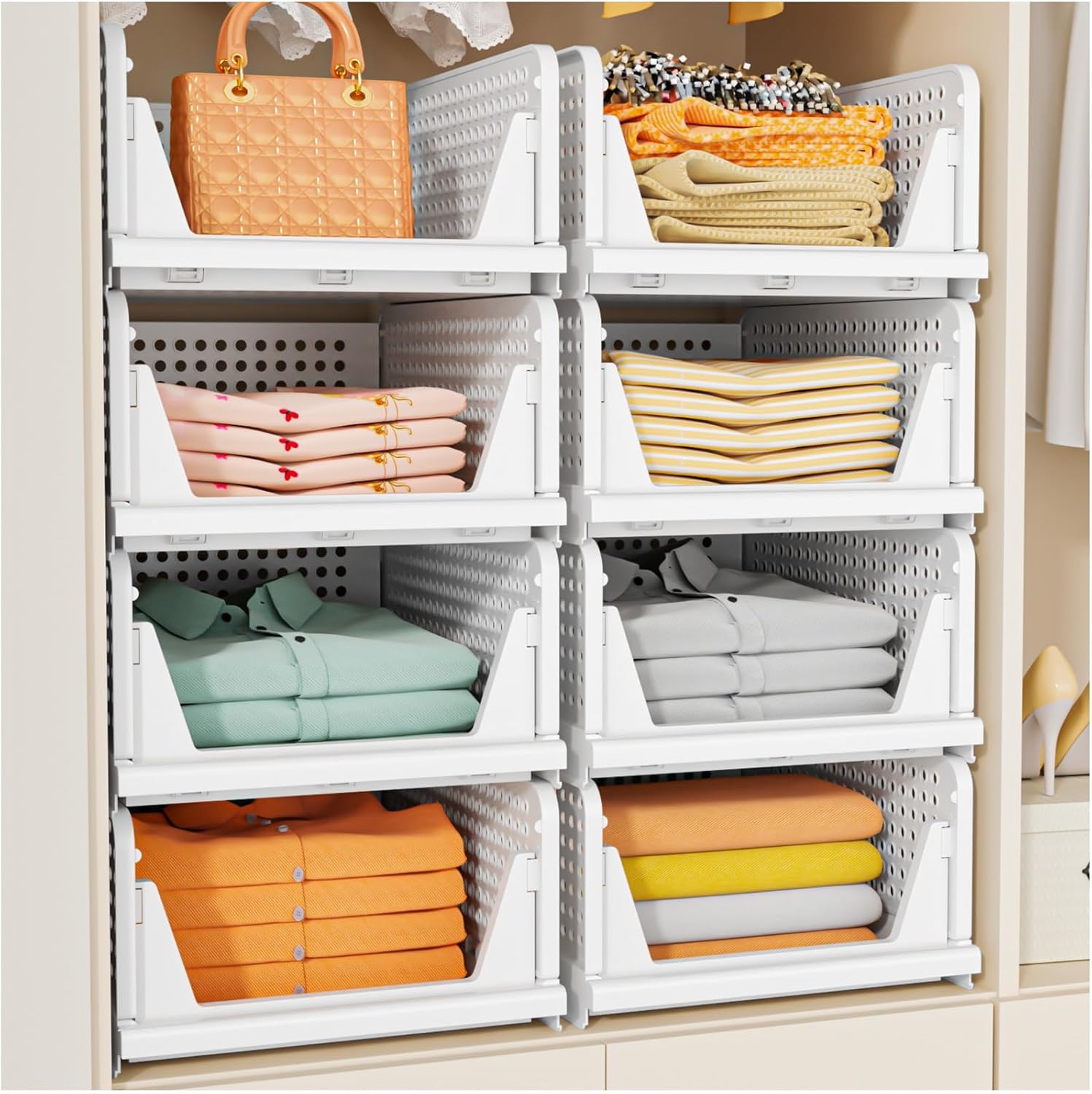

Table of Contents
- How Your Fridge Works
- Prep Before You Organize
- Where to Store Each Food
- Essential Organization Tools
- Foods That DON'T Go in the Fridge
- FIFO Rule: Prevent Waste
- Save Energy
- Tips for Different Fridge Types
- Cleaning and Maintenance
- Smart Shopping List
- Organization for Every Family
- Frequently Asked Questions
- Conclusion
1. How Your Fridge Works
Before organizing, you need to understand how air circulates inside your refrigerator. This knowledge is crucial for putting each food item in the right spot.
Air Circulation Basics
Cold air is heavier and sinks, while warm air is lighter and rises. That's why each part of your fridge has a different temperature.
Temperature zones:
- Top shelf: 34°F to 37°F (1-3°C) - Coldest
- Middle shelves: 37°F to 41°F (3-5°C) - Moderate temperature
- Bottom drawers: 41°F to 46°F (5-8°C) - Least cold
- Door: Varies significantly - Least stable
According to food safety experts, your fridge has natural temperature zones ranging from around 34°F at the bottom to 42°F near the door, and the door compartments experience the most temperature fluctuation.
Why the Door Is the Warmest Spot
The door is the area that experiences the most temperature swings. Every time you open your fridge, warm air rushes in and affects this section the most.
That's why:
- Never store eggs in the door (common mistake)
- Avoid temperature-sensitive products
- Use it for condiments that can handle fluctuation
- Beverages are fine in the door
Why Air Flow Matters
A fridge that's too packed prevents proper cold air circulation. This causes several issues like hot spots where food spoils quickly, higher energy consumption, the compressor working overtime, and reduced appliance lifespan.
Rule of thumb: Keep 20-30% of space open for air circulation.
2. Prep Before You Organize
Effective organization starts with proper preparation. Skipping this step means you'll have to reorganize multiple times.
Empty Everything Out
Remove all food from the fridge without exception. Use a cooler or insulated bag for perishables that need to stay cold.
The right process:
- Put ice or gel packs in your cooler
- Transfer the most sensitive items first
- Group by category as you remove things
- Set aside only what's going back in
Deep Clean Everything
Use white vinegar diluted in water (1:1 ratio) to clean all surfaces. It kills bacteria and won't leave odors on your food.
Step by step:
- Remove all shelves and drawers
- Wash with warm water and mild dish soap
- Wipe down with vinegar solution
- Dry completely before putting back
- Clean door seals (they collect mold)

Strategic Purge
Toss anything past its expiration date or looking sketchy. Better safe than sorry when it comes to foodborne illness.
Toss it if:
- Expiration date has passed
- Smells weird or sour
- Visible mold
- Package is bloated
- Texture changed (slimy or dried out)
- Color changed significantly

Evaluate What Really Needs to Stay
Question each item before returning it to the fridge:
- Use frequently? Eye-level shelf
- Use occasionally? Lower shelves
- Rarely used? Consider tossing
- Duplicates? Keep only one
3. Where to Store Each Food
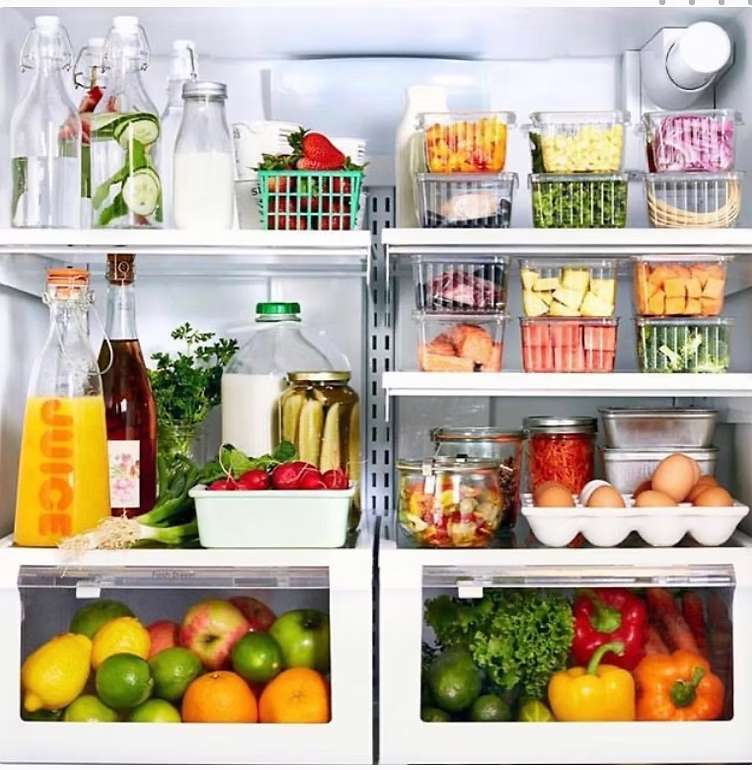
Putting each food in the right spot dramatically increases its shelf life and maintains nutritional quality.
Top Shelf - Coldest Zone (34-37°F / 1-3°C)
This is your fridge's coldest and most stable area. Reserve it for the most sensitive items.
Perfect for:
- Eggs: Always on the shelf, never in the door
- Open butter: Maintains ideal consistency
- Leftovers in sealed containers: Cool and preserve better
- Yogurt: Keeps probiotics alive
- Fresh cheeses: Ricotta, cream cheese, cottage cheese
- Raw meat: In separate container to prevent cross-contamination
Food safety guidelines recommend placing raw meats, poultry, and seafood on shelves in sealed containers to prevent contaminating other foods.
Pro tip: Use airtight containers to prevent cross-contamination between raw and cooked foods.
Middle Shelves - Moderate Temperature (37-41°F / 3-5°C)
The most stable temperature zone. Perfect for liquids and processed foods.
Perfect for:
- Milk and dairy: Open cartons, milk bottles
- Fresh juices: Consume within 2-3 days
- Cooked meats: Always in sealed containers
- Opened canned foods: Transfer to containers
- Homemade sauces: Tomato, pesto, others
- Cured cheeses: Parmesan, provolone
Bottom Drawers - Humidity Zone (41-46°F / 5-8°C)
Designed to maintain ideal humidity for produce. Slightly warmer temperature preserves texture.
Vegetable drawer:
- Leafy greens (lettuce, arugula, spinach)
- Vegetables (carrots, zucchini, eggplant)
- Fruits needing cold (grapes, strawberries)
- Fresh herbs (parsley, cilantro, basil)
How to store properly:
- Use perforated bags or containers with vents
- Don't wash before storing (moisture speeds decay)
- Remove wilted leaves before storing
- Separate ethylene-producing fruits (apples, pears)
Need more tips on refrigerator essentials? Check out our recommended products.
Door - Fluctuating Zone (Unstable Temperature)
The area with the most temperature variation. Use only for resistant products.
Perfect for:
- Condiments: Ketchup, mustard, mayo
- Beverages: Water, soda, packaged juice
- Jams and preserves: Already contain preservatives
- Commercial sauces: Soy sauce, Worcestershire
- Butter: If using very frequently
Avoid in the door:
- Eggs (need stable temperature)
- Milk (spoils faster)
- Meats (any type)
- Temperature-sensitive foods
4. Essential Organization Tools
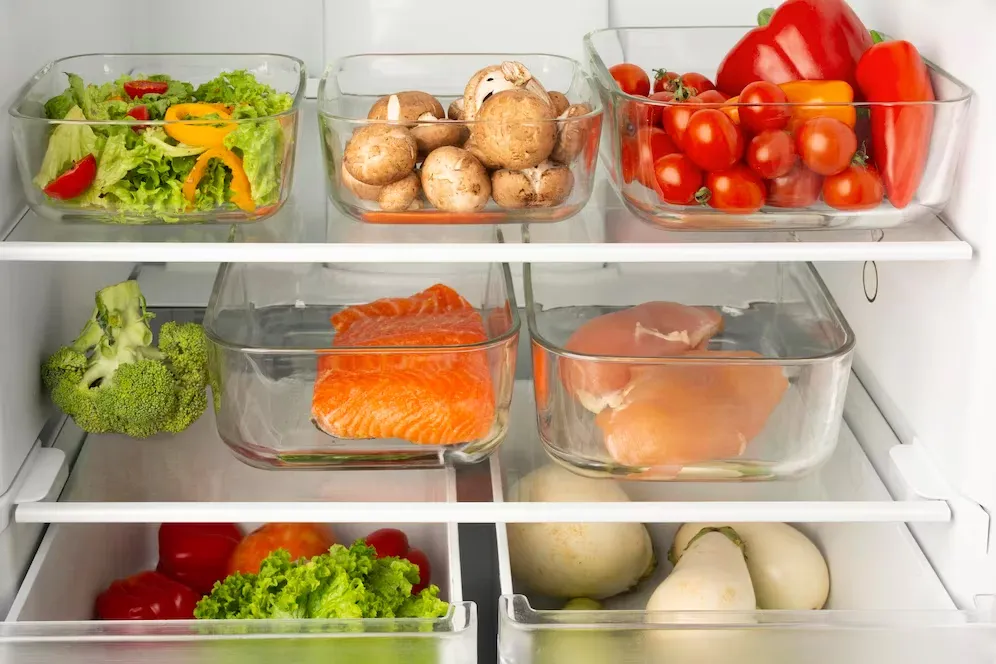
The right organizers completely transform your fridge's functionality. They make it easier to see what you have, access items, and preserve food.
Why Use Organizers
Main benefits:
- Clear view of everything you have
- Easy access without making a mess
- Better use of available space
- Easier cleaning (remove and wash)
- Reduces waste from forgetting food
- Keeps food logically grouped
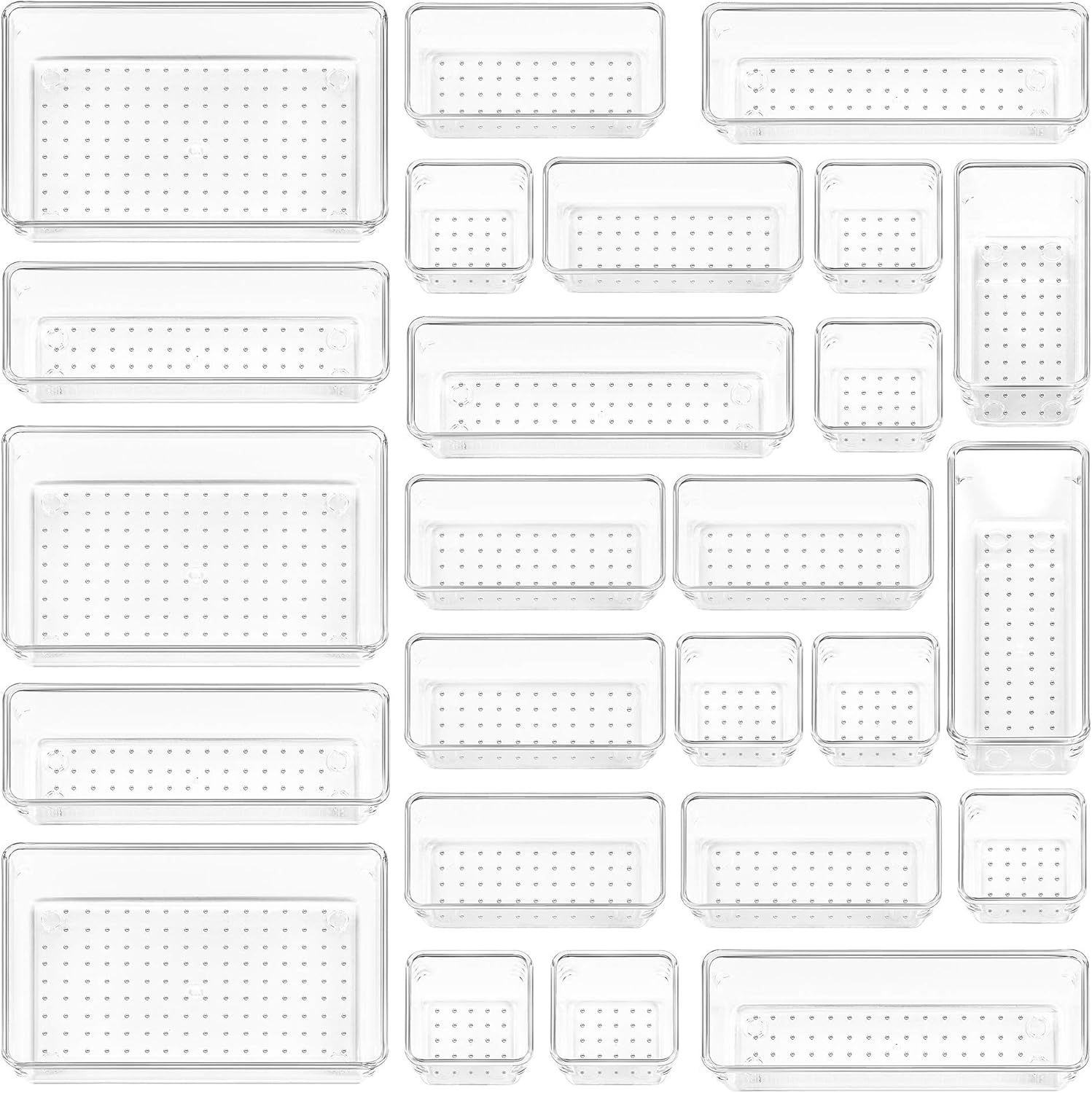
Recommended Organizer Types
- Clear for easy viewing
- Airtight lids preserve freshness
- Stackable saves space
- Perfect for leftovers and chopped foods
- Various sizes for different needs
- Perfect for vegetable drawers
- Keeps organization by category
- Makes stock rotation easier
- Ventilated base prevents moisture buildup
- Shelf dividers
- Keeps food groups together
- Makes spill cleanup easier
- Remove to wash separately
For a complete kitchen organization system, check out our detailed guide with more tips.
Container Rules
Always:
- Use lids to prevent drying out
- Leave space for expansion (liquids)
- Label with storage date
- Prefer glass for hot foods (let cool first)
- Transfer opened canned goods to containers
Never:
- Fill to the rim (needs space to seal)
- Store opened cans in the fridge
- Use cracked containers or bad seals
- Stack heavy containers on fragile ones
Labeling System
Labels with dates prevent waste and food poisoning:
What to label:
- Meal leftovers (prep date)
- Cooked foods (3-5 day shelf life)
- Thawed raw meats (use within 24h)
- Fresh juices (use within 48h)
- Foods transferred from original packaging
Use:
- Removable adhesive labels
- Washable permanent marker
- Or masking tape with date

5. Foods That DON'T Go in the Fridge
Many foods actually lose quality when refrigerated. Knowing which ones stay better out saves space and maintains flavor.
Fruits That Prefer Room Temperature
Bananas:
- Peel darkens in cold (oxidation process)
- Flesh gets mealy and flavorless
- Better texture outside
- Only refrigerate if overripe
Avocados:
- Only refrigerate after ripe
- Cold stops ripening process
- To ripen: wrap in newspaper
- After cutting: refrigerate with pit in
Melons and watermelons:
- Whole are better outside
- Refrigerate only after cutting
- Cold reduces flavor and aroma
- Serve chilled, but don't store chilled
Other fruits:
- Apples (up to a week outside)
- Pears (until ripe)
- Papaya (until ripe)
- Mangoes (until ripe)
Vegetables That Deteriorate in Cold
Potatoes:
- Starch turns to sugar in cold
- Gets sweet and weird texture
- Store in dark, ventilated place
- Away from onions (gases speed sprouting)
Onions:
- Need ventilation (rot in cold)
- Moisture causes mold
- Store in dry, airy place
- Separate from potatoes
Garlic:
- Can sprout in fridge
- Loses flavor and gets rubbery
- Store in dry place
- Prefer room temperature
Tomatoes:
- Completely lose flavor in cold
- Texture gets mealy
- Refrigerate only if very ripe
- To preserve: make sauce and freeze
Want to learn more about proper food storage? Check out our comprehensive guide.
Other Items
Bread:
- Dries out badly in cold
- Loses crispy texture
- Freeze if not consuming within 2 days
- Never refrigerate
Coffee:
- Absorbs odors from other foods
- Moisture damages flavor
- Store in airtight container
- Dry, dark place
Honey:
- Crystallizes in fridge
- Loses natural fluidity
- Lasts years at room temperature
- Natural preservative
Olive oil:
- Gets cloudy and solidifies
- Loses aromatic characteristics
- Keep at room temperature
- Dark place preserves quality
6. FIFO Rule: Prevent Waste
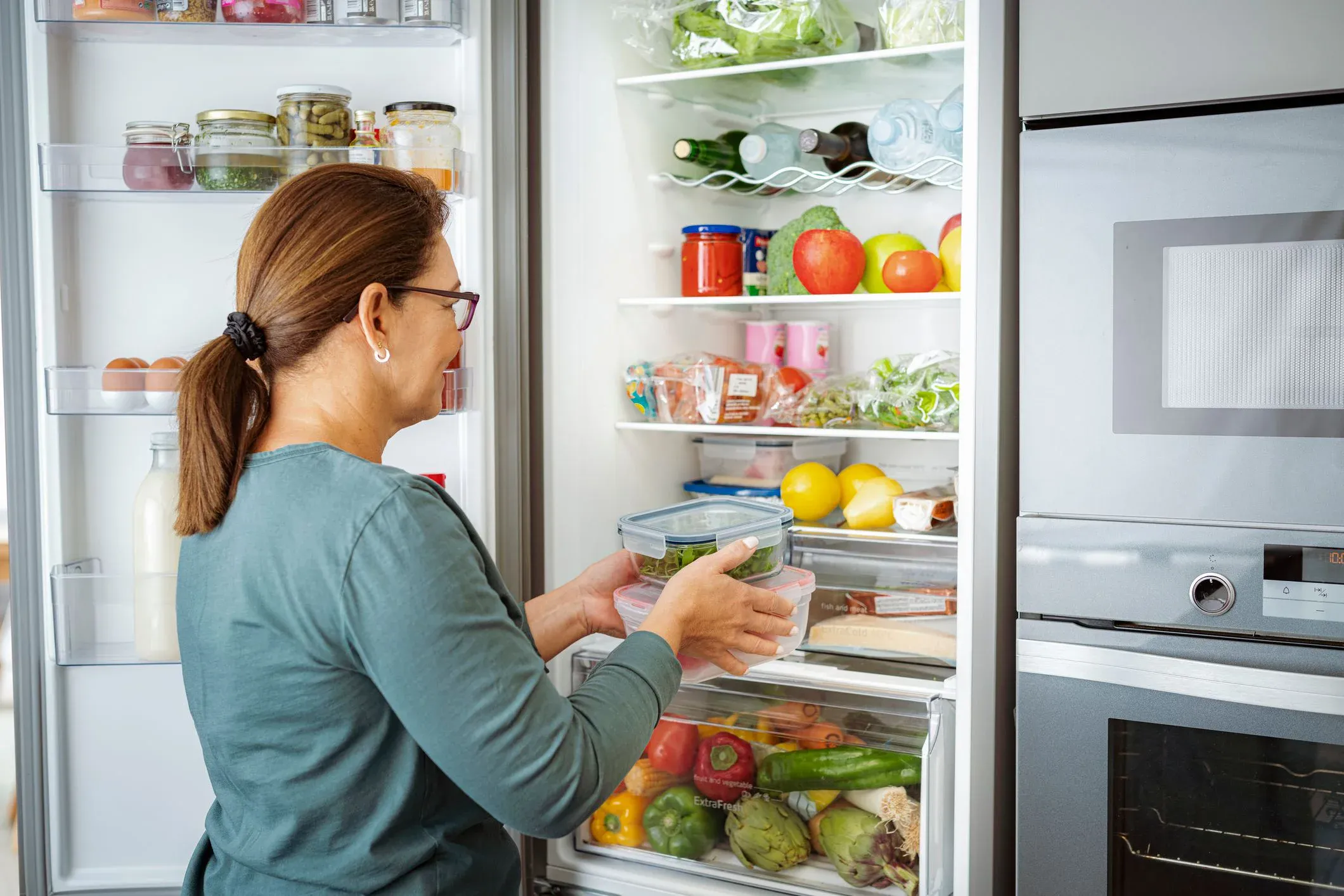
FIFO (First In, First Out) is a food storage system designed to use foods that have been in your kitchen the longest, helping reduce waste by up to 50%.
How the FIFO System Works
The concept is simple: eat the food that's been in your fridge the longest first.
Practical implementation:
- New products always go behind old ones
- What expires first goes in front
- Use labels with entry dates
- Eat what's been there longest first
- Reorganize after each shopping trip
Proven Benefits
Financial savings:
- Reduces food waste
- Decreases duplicate purchases
- Better use of sales
- Avoids throwing food away
Health and safety:
- Consumes food at nutritional peak
- Prevents food poisoning from expired items
- Maintains healthy eating routine
Rotation Techniques
Weekly shopping:
- Before shopping, organize fridge
- Bring old items to front
- New products go in back
- Plan meals using oldest items first
Visual system:
- Use clear containers
- Color-coded labels by week
- Top shelf: immediate consumption
- Create "attention zone" for items nearing expiration
Looking for quality kitchen storage solutions? Browse our top picks.
7. Save Energy
A well-organized fridge can use up to 30% less energy. The savings come from operational efficiency.
How Organization Reduces Consumption
Door-open time:
- Find everything quickly
- Less time with door open
- Less warm air enters
- Compressor works less
Air circulation:
- Space between foods allows circulation
- Uniform temperature throughout
- Compressor doesn't compensate for hot spots
- Greater energy efficiency
Energy-Saving Best Practices
Never put hot food in:
- Wait until completely cool
- Hot food forces compressor to max
- Raises temperature of entire interior
- Can spoil other foods
Maintain proper spacing:
- 20-30% free space
- Don't block air vents
- Leave space between products
- Avoid overloading shelves
Check seals:
- Test by closing paper in door
- If slides easily, seal is bad
- Replace worn gaskets
- Clean gaskets monthly
Ideal temperature:
- Fridge: 37-40°F (3-4°C)
- Freezer: 0°F (-18°C)
- Don't set colder than necessary
- Use thermometer to verify
Extra Energy Tips
Appliance location:
- Away from heat sources (stove, window)
- Ventilation space behind (4 inches minimum)
- Not touching the wall
- Level properly adjusted
Want more money-saving tips? Check out our complete guide on how to save electricity at home.
8. Tips for Different Fridge Types
Each type of refrigerator has specific characteristics that influence organization.
Frost-Free Fridges
System prevents ice buildup but dries food faster.
Necessary adaptations:
- Always cover all foods
- Use well-sealed containers (airtight)
- Vegetables in perforated plastic bags
- Better use of height (more spaced shelves)
Advantages:
- No manual defrosting needed
- More uniform temperature
- Optimized interior space
- Easier cleaning
Top-Freezer Fridges
Two independent compartments offer flexibility.
Strategic organization:
- Freezer (top): Stock and frozen goods
- Bottom section: Daily and weekly use
- Organize by access frequency
- Freezer for bulk purchases
Maximize freezer space:
- Freeze individual portions
- Use proper freezer bags
- Label with date and contents
- Organize in boxes by category
Browse appliances and storage solutions to upgrade your kitchen setup.
Side-by-Side Fridges
Double doors offer tons of space but require careful organization.
Use space wisely:
- Right side: beverages and liquids
- Left side: solid foods
- Use door organizers
- Adjustable shelves help
Small Fridges
Limited space demands maximized organization.
Strategies:
- Prioritize essentials only
- Use vertical organizers
- Maximize door space
- Shop more frequently (less stock)
- Freeze less, buy fresh
9. Cleaning and Maintenance
Regular maintenance extends your fridge's lifespan and keeps food safe.
Weekly Routine (15-20 minutes)
Quick checklist:
- [ ] Check all expiration dates
- [ ] Remove spoiled or questionable food
- [ ] Clean spills immediately
- [ ] Reorganize displaced items
- [ ] Wipe visible shelves
- [ ] Empty and clean vegetable drawer
Complete Monthly Cleaning (1 hour)
Deep process:
- Empty completely using cooler
- Remove shelves and drawers
- Wash with warm water and mild dish soap
- Apply vinegar solution (disinfects and removes odors)
- Clean door gaskets with soft brush
- Dry everything completely
- Clean exterior and top
- Reorganize following FIFO system
Signs You Need Urgent Cleaning
Watch for:
- Persistent bad smell (even after removing expired items)
- Dark spots on shelves (mold)
- Food spoiling faster than normal
- Too much ice in freezer (frost-free)
- Water pooling at bottom
- Different compressor noise
Preventive Maintenance
Every 6 months:
- Clean rear coils (dust buildup)
- Check thermostat function
- Test gasket seals
- Defrost freezer if needed (older fridges)
For more cleaning supplies and tools, check out our recommended products.
Recommended Cleaning Products
Use:
- Diluted white vinegar (1:1 with water)
- Baking soda (absorbs odors)
- Mild dish soap
- Microfiber cloths
Avoid:
- Abrasive products (scratch)
- Pure bleach (leaves strong smell)
- Steel wool sponges (damage surface)
- Harsh chemicals
10. Smart Shopping List
With an organized fridge, your shopping becomes more efficient and economical.
Before Heading to the Store
Pre-shopping checklist:
- Check what you actually need
- Note what's running low
- Plan the week's meals
- Consider available fridge space
- Check store sales
Meal Planning
Weekly system:
- Monday through Sunday: basic menu
- List necessary ingredients
- Consider reusing leftovers
- Plan meals using same ingredients
Planning example:
- If buying chicken: make 2-3 different recipes
- If buying tomatoes: sauce, salad, juice
- Vegetables: salads, stir-fries, soups
Space-Based Shopping
Essential categories:
Daily (buy less):
- Fresh bread
- Very ripe fruits
- Delicate vegetables
Weekly (medium stock):
- Dairy
- Fresh meats
- Vegetables
- Fruits
Bi-weekly/Monthly (larger stock):
- Frozen foods
- Canned goods
- Preserves
- Cleaning products
Avoid Waste When Shopping
Important tips:
- Don't shop hungry (buy 30% more)
- Stick to your list strictly
- Take advantage of sales only on what you use
- Choose portion sizes appropriate for consumption
- Consider freezing if buying bulk
For more kitchen organization ideas, visit our guide on complete kitchen setup.
11. Organization for Every Family
Different family profiles need adapted strategies.
Families With Kids
Important adaptations:
- Healthy snacks at kids' eye level
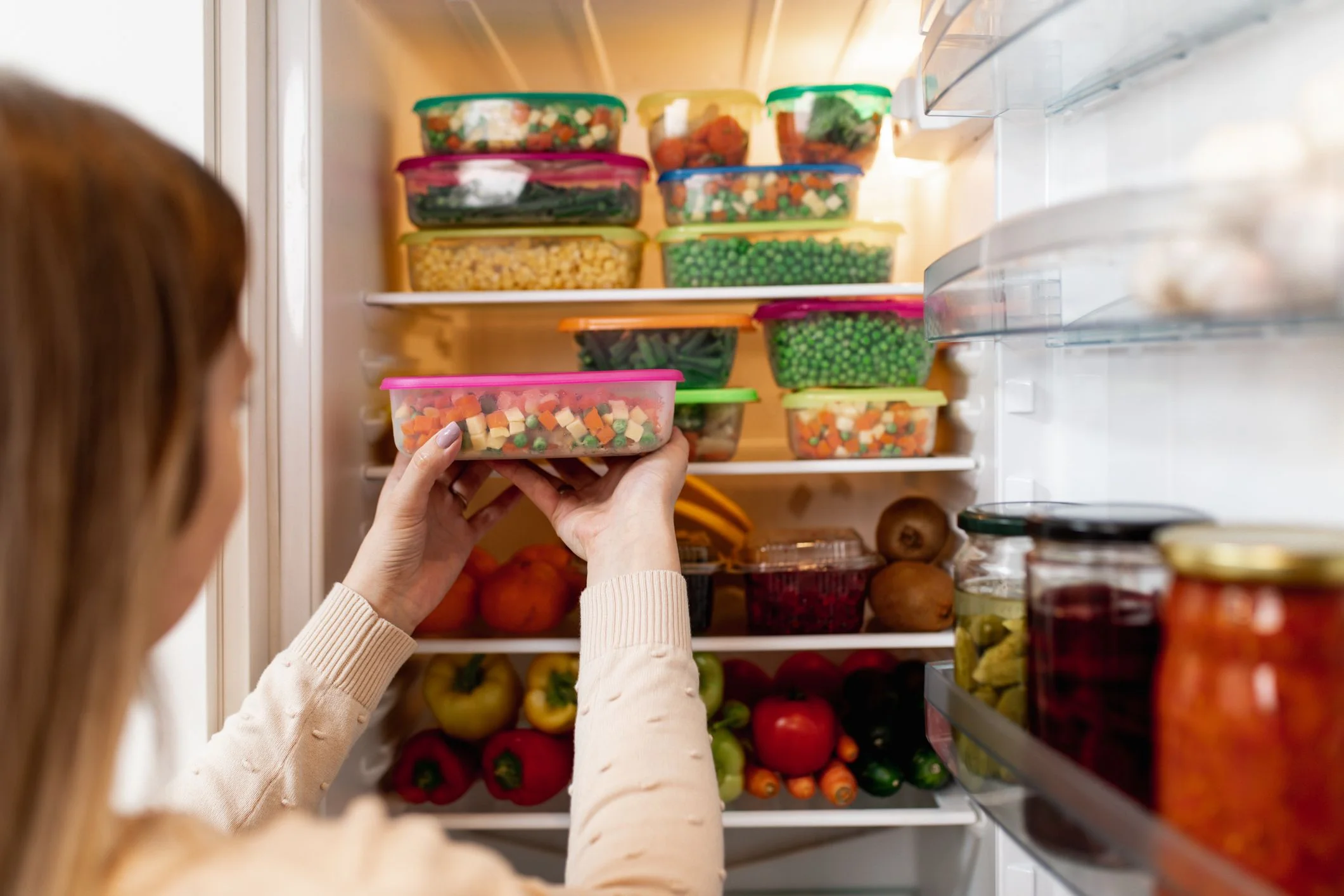
- Colorful containers for easy identification
- Pre-cut fruits always ready
- Accessible water bottles
- Individual portions of yogurt and cheese
Kids' zone:
- Bottom drawer: allowed snacks
- Low shelf: beverages
- Clear containers: see contents
- Picture labels (pre-readers)
Check out family-friendly storage and organization products.
Living Alone
Optimize for one person:
- Individual frozen portions
- Freeze more foods (last longer)
- Smaller, more frequent shopping
- Less variety, more rotation
- Invest in practical meal prep containers
Strategies:
- Cook and freeze portions
- Buy smaller packages
- Use delivery for variety
- Don't overstock (spoils)
Large Families (5+ people)
Specific challenges:
- Large volume of food
- High turnover
- Control who took what
Solutions:
- Strict labeling system
- Clear shelves by category
- Large or double fridge
- Organized weekly shopping
- Everyone puts away what they take
Serious Home Cooks
Special needs:
- Space for prepped ingredients
- Many labels with dates
- Various container sizes available
- Organized leftover area
Professional organization:
- Square prep containers (save space)
- Detailed labels (contents + date)
- Color system by prep type
- Dedicated shelf for "mise en place"
Frequently Asked Questions
Where should I store eggs in the fridge?
Eggs should be stored on the top shelf of your refrigerator, which is coldest and maintains the most stable temperature. Never store eggs in the door where temperature fluctuates with each opening.
Which foods shouldn't go in the fridge?
Bananas, potatoes, onions, garlic, tomatoes, bread, honey, and olive oil are all better stored at room temperature. Cold temperatures alter their texture, flavor, and can actually speed up deterioration.
How can I save energy with an organized fridge?
An organized refrigerator reduces door-open time by up to 50%, improves cold air circulation, and decreases the compressor's workload, resulting in up to 30% energy savings.

How often should I clean my fridge?
Do a quick clean-out every week checking expiration dates and removing spoiled items. Perform a complete deep clean with shelf removal once a month.
What is the FIFO rule?
FIFO stands for "First In, First Out." It's a food storage system that ensures items stored longest are used first, significantly reducing waste and preventing food from spoiling.
Conclusion
Organizing your fridge is way simpler than it seems once you understand the basic principles. With proper temperatures for each food type, the FIFO system, and the right organizers, you'll save money and eliminate waste.
The golden rule is straightforward: each food in its right spot, FIFO system always active, and weekly cleaning. Within a few weeks, this routine becomes automatic and you'll never have to throw away food forgotten in the back of your fridge again.
Start implementing one step at a time and transform your refrigerator into a model of organization and efficiency!